
Satisfies 1 requirement
1t 1.2t 1.6t 1.8t 2t 2.5t Excavator Cheap Prices Euro 5 EPA
US$2,980.00-3,380.00
1 Piece(MOQ)

I have found results from10000+products and4000+suppliers about2.5t excavator


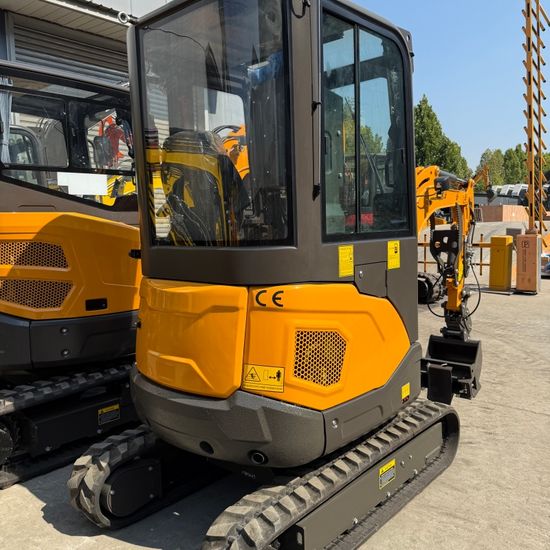

When selecting a 2.5T excavator, focus on the engine brand and power, typically looking for reputable names like Kubota or Yanmar to ensure global parts availability. Evaluate the hydraulic system pressure and flow rate, as these determine digging force and cycle times. Key metrics include a maximum digging depth of approximately 2,300-2,800mm and a bucket capacity of 0.06-0.1m³. Additionally, check for zero-tail swing capability, which is essential for working in confined urban spaces without damaging the machine or surroundings.
For the European market, the machine must have a CE certification and meet Stage V emission standards. For the North American market, EPA Tier 4 Final compliance is mandatory. Ensure the cabin or canopy meets ROPS (Roll-Over Protective Structure) and FOPS (Falling Object Protective Structure) safety standards. Buyers should request ISO 9001 quality management certificates from the manufacturer to verify consistent production standards.
Request high-definition videos of the welding quality on the boom and arm; smooth, robotic welds indicate superior structural integrity. Inquire about the thickness of the steel plates used in the chassis and bucket. Ask for the brand of the main pump, valve, and swing motor, as high-end components from brands like Nachi, Rexroth, or Kyb significantly extend the machine's service life. Finally, verify if the pins and bushings are heat-treated for wear resistance.
Prioritize machines equipped with auxiliary hydraulic piping as standard, allowing for the use of attachments like hydraulic breakers, augers, and thumbs. A hydraulic quick hitch is a high-value feature that allows operators to switch attachments in seconds. For landscaping or indoor work, retractable tracks (adjusting from 1,100mm to 1,500mm) and swing boom functionality are critical for navigating narrow passages and digging alongside walls.
Utilize secure payment methods and consider third-party inspection services like SGS or TÜV to conduct a pre-shipment inspection. On platforms like Made-in-China.com, look for Audited Suppliers who have undergone comprehensive on-site verification. Always sign a detailed Proforma Invoice (PI) that specifies the engine serial number, main component brands, and warranty terms to prevent 'specification bait-and-switch'.
For a single 2.5T unit, LCL (Less than Container Load) is possible but risky; 20GP containers are safer and can usually fit two units, while a 40HQ container can fit five to six units, significantly reducing the per-unit freight cost. Ensure the supplier uses heavy-duty steel wire and wooden chocks to lash the machine securely inside the container to prevent shifting during sea transit.
Don't just negotiate on the sticker price; negotiate for wearing parts packages (filters, seals, teeth) to be included for the first 1,000 hours of service. Discuss OEM/branding options if you are ordering more than 3 units. Ask for a price breakdown based on Incoterms (FOB vs. CIF) to determine if your local freight forwarder can offer a better rate than the supplier's agent.
Confirm the warranty period, which is typically 12 months or 2,000 working hours. Ensure the supplier provides English-language service manuals and hydraulic schematics. A critical strategy is to confirm that the filters and high-wear components are cross-compatible with locally available brands to avoid long downtimes waiting for international air express parts.