
Satisfies 1 requirement
Fish Tanks Farm Aquaculture PVC, PVC Fish Tank Tarpaulin Round, PVC Fish Breeding Tank
US$99.00-2,999.00
1 Piece(MOQ)

I have found results from30000+products and9000+suppliers aboutAquaculture fish tanks


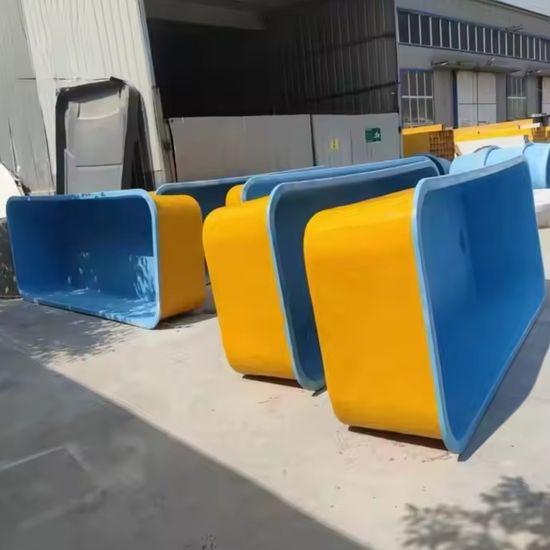


Buyers should prioritize High-Density Polyethylene (HDPE) or Fiberglass Reinforced Plastic (FRP). HDPE is preferred for its high impact resistance, UV stability, and non-toxic properties, making it ideal for outdoor use. FRP tanks offer superior structural rigidity and a smooth interior surface which prevents bacterial buildup and facilitates easier cleaning. Ensure the material is food-grade certified to prevent chemical leaching into the water.
Ensure the tanks feature integrated bottom drains (center drains) with a slope of at least 1:50 to facilitate self-cleaning and solids removal. The tank design must support dual-drainage systems to separate large particles from the main water flow. Verify that the inlet and outlet diameters are compatible with standard PVC or PE piping sizes used in international filtration systems to avoid costly custom adapters.
Suppliers should provide ISO 9001 certification for manufacturing quality management. For the materials, look for FDA or EU food-contact compliance reports. If the tanks include electrical components (like integrated aerators or sensors), they must carry CE, UL, or RoHS markings depending on the destination market (EU/USA) to ensure safety and legal entry through customs.
Circular tanks are superior for water circulation and oxygen distribution, creating a uniform environment that reduces 'dead zones.' They are ideal for high-density salmon or tilapia farming. Rectangular or D-ended tanks are more space-efficient for indoor facilities but require more sophisticated aeration to ensure adequate flow in the corners. Choose based on your available floor area and species-specific swimming patterns.
Request 'nestable' designs from suppliers on Made-in-China.com. Tapered tanks allow multiple units to be stacked inside one another, significantly reducing the volumetric weight and container space required. For very large tanks (over 3 meters in diameter), consider panel-based bolt-together tanks that can be shipped flat-packed and assembled on-site to save up to 70% on freight costs.
The primary risk is structural damage during transit, such as cracking or deformation due to improper stacking. Always insist on reinforced steel-frame packaging for FRP tanks. Another risk is specification mismatch; always request a technical drawing (CAD/PDF) for approval before production begins to verify drain placements and flange sizes.
Focus on Total Cost of Ownership (TCO) rather than just the unit price. Negotiate for extended warranties (minimum 2-5 years) on UV resistance and structural integrity. If purchasing in bulk, ask for spare parts kits (valves, seals, and repair resins) to be included at no extra cost. Use Made-in-China.com's Secured Trading services to ensure payment is only released upon proof of shipment and quality inspection.
Hire a third-party inspection agency (like SGS or Intertek) to perform a hydrostatic test (filling the tank with water for 24-48 hours) at the factory to check for leaks. Never settle the final 70% balance until you receive a Pre-Shipment Inspection (PSI) report and a Bill of Lading (BL) copy.