
Satisfies 1 requirement
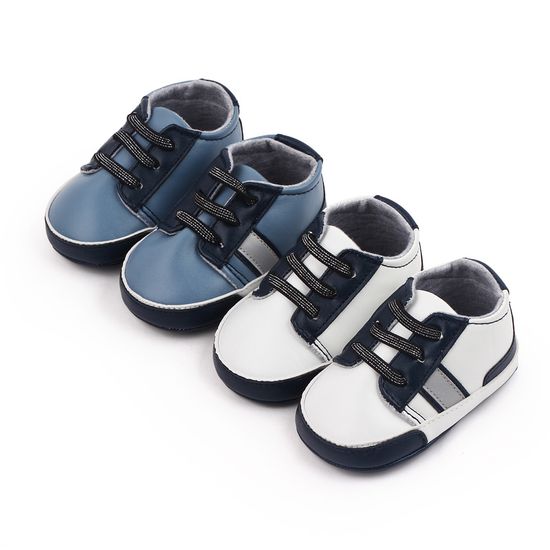
Toddler Infants Baby Boys and Girls Soft Sneaker Baby Newborn Shoes Ex-24r2969
US$6.26-30.00
1 Pair(MOQ)

I have found results from10000+products and3000+suppliers aboutBaby boys shoes




Prioritize breathable, natural materials such as genuine leather, organic cotton, or high-grade mesh. For the soles, thermoplastic rubber (TPR) or soft suede is essential to provide slip resistance while allowing for natural foot development. Ensure all materials are BPA-free, lead-free, and phthalate-free to prevent skin irritation or toxicity.
Compliance with ASTM F963 (USA), EN71 (Europe), and CPSIA (Consumer Product Safety Improvement Act) is mandatory. These standards regulate small parts (choking hazards), sharp edges, and chemical content. Always request third-party lab test reports from the supplier to confirm the shoes meet these specific regional safety benchmarks.
Look for a wide toe box that allows toes to splay naturally and a flexible sole that can be easily bent by hand. For 'first walkers,' the heel should have firm support to prevent slipping, while the closure system (Velcro or elastic) must be secure yet adjustable to accommodate different instep heights.
Sourcing should be categorized by function: Pre-walkers (soft-sole) for infants, First-step shoes (rubber-sole) for toddlers, and Occasion wear (loafers/oxfords) for formal events. For outdoor use, ensure the shoes have water-resistant coatings and reinforced toe caps for durability during crawling and playing.
Implement a strict sampling process before placing bulk orders. Use Made-in-China.com's 'Audited Supplier' reports to verify the factory's production capacity and quality control systems. It is highly recommended to hire a third-party inspection service (like SGS or Intertek) to perform a 'During Production Check' (DUPRO) and a 'Final Random Inspection' (FRI).
Focus on Tiered Pricing based on volume; for instance, aim for a 15-20% discount when moving from 500 to 2,000 pairs. Negotiate for customized packaging (OEM) and branding at lower MOQs by offering to pay for the packaging materials upfront. Always clarify Incoterms (FOB is preferred) to maintain control over shipping costs.
Footwear often attracts specific anti-dumping duties in certain regions (e.g., EU or South America). Ensure your supplier provides an accurate HS Code (typically Chapter 64) and a detailed Commercial Invoice. For small-to-medium batches, Air Freight or LCL (Less than Container Load) is most efficient, but ensure the shoes are packed in moisture-proof silica gel packets to prevent mold during sea transit.
Utilize Secured Payment services provided by Made-in-China.com to ensure funds are only released upon confirmation of shipment. Avoid direct wire transfers to private accounts. Ensure the Sales Contract explicitly states the 'Defective Rate' allowance (usually <2%) and the compensation protocol for sub-standard goods.