

Hzm loader
I have found results from3000+products and1000+suppliers aboutHzm loader
Commonly Used:
US$
—
Customization Available
Sample Available
Manufacturer First
Product Attributes:
Type: Small Loader
Type: Medium-sized Loader
Type: Large Loader
Certification: TUV
Condition: New
Rated Load: 1-3t
Transmission: Hydraulic
Load and Unload Mode: Front Discharge
Walking Mode: Wheeled
Certification: UL
Certification: ISO
Certification: RoHS
Certification: CE
Rated Load: <1t
Rated Load: 3-6t
Hydraulic - Mechanical
Load and Unload Mode: Rotary

Satisfies 1 requirement
China Supplier Good Quality Zl 500 Articulating Hzm Mini Loader
US$3,900.00-8,300.00
1 Piece(MOQ)

Satisfies 1 requirement
Hzm 816 Best Loader with Top Quality 1.6ton Small Wheel Loader
US$12,000.00-12,300.00
1 Piece(MOQ)

Satisfies 1 requirement
Hzm 825t Compact Wheel Loader (1ton 2ton 3ton) / Free Shipping EPA Euro5 Manufacturer Wheel Mini Loader Telescopic Loader
US$13,500.00
1 Piece(MOQ)

Satisfies 1 requirement
500kg Mini Wheel Loader From Hzm New Supply EPA Euro5 Engine CE 0.2m³ Compact Shovel Bucket Wheel Loader for Sale
US$7,500.00
1 Piece(MOQ)

Satisfies 1 requirement
Hzm Factory Sk1500t EPA Euro V Best Cheap Price Diesel Engine Track Skid Steer Mini Skid Steer Loader for Sale and Construction
US$32,500.00
1 unit(MOQ)

Satisfies 1 requirement
High Quality Cab Mini Loader Compact Skid Steer Loader 1ton Hzm Brand Sk1100 with CE/EPA/Rops
US$20,800.00
1 unit(MOQ)

Satisfies 1 requirement
Hydrostatic 809 Hzm Huizhong Qingzhou Mini Loader/Hot Sale in Euro
US$9,230.00
3 Pieces(MOQ)

Satisfies 1 requirement
Hzm Huizhong Brand 700kg 4WD Electric Zero Garden Wheel Loader807e 606 Lead Acid Battery for Sale
US$9,230.00
3 Pieces(MOQ)
Satisfies 1 requirement
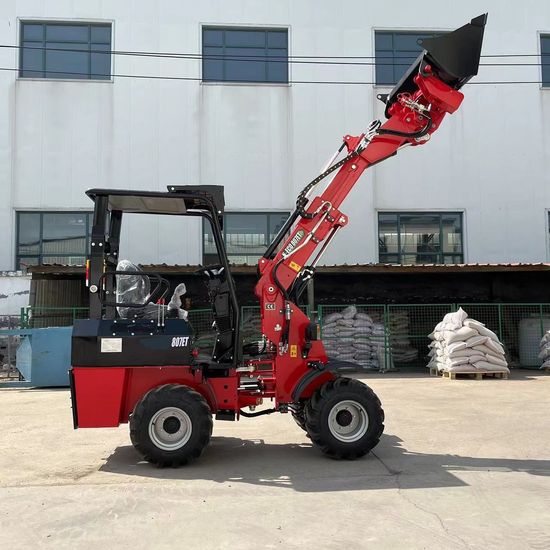
Cheap Popular Hzm 807 Wheel Loader with Euro V
US$7,400.00-7,500.00
1 Piece(MOQ)

Satisfies 1 requirement
1.2m³ Chinese New Hzm Backhoe Wheel Loader with Excavator with Good Price
US$36,000.00
1 unit(MOQ)

Satisfies 1 requirement
Hzm Hzm810 1.0t Wheel Loader Directly Supplied by Manufacturer
US$13,500.00
1 UNIT(MOQ)

Satisfies 1 requirement
CE ISO EPA Hzm New Mini 50HP 65HP 75HP 85HP 500kg-1500kg Skid Steer Loader Micro Wheel Andtrack Steer Skid Loader with Attachment Parts Price for Sale
US$32,500.00
1 unit(MOQ)

Satisfies 1 requirement
Chinese Factory Hzm 1.0ton Multi-Attachment Hydraulic Compact Articulated Diesel Mini Front Wheel Loader
US$13,500.00
1 UNIT(MOQ)

Satisfies 1 requirement
Hzm Hot Sale H1 Hzm816 1.6ton CE Approved Multifunction Front End Small Bucket Telescopic Miniwheel Loader
US$11,500.00
1 Piece(MOQ)

Satisfies 1 requirement
Hzm Factory Directly Supply Excavator Backhoe Loader Heavy Duty Construction CE/ISO/Rops with Different Attachments
US$30,500.00
1 unit(MOQ)

Satisfies 1 requirement
Chinese Hzm Brand Sk1100 Mini Loader Skid Steer Loader Construction Machinery
US$20,800.00
1 unit(MOQ)


Satisfies 1 requirement
Hzm 825t 2.5ton Front End Bucket Wheel Loader with Telescoping Arms
US$11,400.00
1 Piece(MOQ)


Satisfies 1 requirement
2.5t Hzm 825 Wheel Loader, 1.0m³ Bucket with Attachments Trassmition Loade
US$11,000.00-12,000.00
1 Piece(MOQ)

Satisfies 1 requirement
Hzm 810t Telehandler Wheel Loader, Mini Loader, 1000kg, 0.5cbm, Factory Price
US$12,300.00-16,000.00
1 UNIT(MOQ)

Satisfies 1 requirement
Hot Sale Hzm 810t Telescopic Wheel Loader with 1.1 Ton Loading Capacity
US$12,300.00-16,000.00
1 UNIT(MOQ)

Satisfies 1 requirement
Hot Sale Hzm 811t Telescopic Wheel Loader with 1.1 Ton Loading Capacity
US$8,500.00
1 Piece(MOQ)

Satisfies 1 requirement
Hzm 825 Wheel Loader 2.5t Can Choose Different Attachment
US$13,500.00
1 Piece(MOQ)

Satisfies 1 requirement
Hzm Mini Small 812 Wheel Loader Foe Sale Rrassmission for Sale
US$11,400.00
1 Piece(MOQ)


Satisfies 1 requirement
1000kg Hzm 810 Wheel Loader, Mini Loader, Power and Efficiency
US$12,500.00-16,000.00
1 UNIT(MOQ)


Satisfies 1 requirement
Hzm 811 Mini Loader, Compact with CE/TUV/EPA/Rops, Multi-Functional /Attachments/Blade/Fork /4in 1 Bucket Foe Garden
US$11,500.00
1 Piece(MOQ)
Sourcing guidance for Hzm Loader
What are the key technical specifications to evaluate when purchasing an HZM loader?
When selecting an HZM loader, buyers must focus on the engine brand and power (e.g., Xinchai, Yunnei, or Cummins) to ensure reliable performance. Key metrics include rated load capacity (ranging from 0.8 to 5.0 tons), maximum dumping height, and hydraulic system pressure. For heavy-duty operations, prioritize models with pilot joysticks for precision and articulated steering for better maneuverability in tight spaces.
Which international compliance standards should HZM loaders meet for cross-border trade?
For entry into the European market, the loader must have CE Certification and meet Euro 5 emission standards. For the North American market, EPA Tier 4 Final compliance is essential. Additionally, ensure the cabin meets ROPS (Roll-Over Protective Structure) and FOPS (Falling Object Protective Structure) safety standards to protect operators and comply with international labor safety regulations.
How can I assess the durability and build quality of the loader remotely?
Request detailed photos or videos of the chassis welding quality and the thickness of the steel plates used in the boom and bucket. Verify the brand of the main pump and valves, as high-quality hydraulic components significantly reduce oil leaks and downtime. Ask the supplier for third-party inspection reports or factory testing videos showing the loader operating under full load.
What customization options are typically available for HZM loaders to suit specific usage scenarios?
Suppliers on Made-in-China.com often offer various attachments such as pallet forks, grass grabbers, snow blades, and 4-in-1 buckets. For cold climates, specify the need for a pre-heating system and cabin heater. For agricultural use, widened tires may be required to reduce ground pressure and improve traction in muddy conditions.
Cross-Border Procurement Strategy for Heavy Machinery
What are the primary risks when importing heavy machinery like loaders?
The biggest risks include shipping damage and non-compliance with local emissions laws. To mitigate these, ensure the supplier uses professional sea-worthy packaging (often involving iron wire fixation in containers) and verify that the Engine Serial Number matches the provided compliance certificates to avoid customs seizure.
How should I negotiate with HZM loader suppliers to ensure long-term value?
Focus negotiations on the spare parts package rather than just the unit price. Request a 'wear-parts kit' (filters, seals, belts) for the first 2,000 hours of operation. Additionally, negotiate for a 12 to 24-month warranty on major components like the engine and transmission, and confirm the availability of technical video support for maintenance.
What is the most cost-effective shipping method for loaders to international destinations?
For smaller loaders, 40HC (High Cube) containers are most economical, though the cabin or tires may need disassembly. For larger models, Ro-Ro (Roll-on/Roll-off) or Flat Rack shipping is necessary. Always clarify the Incoterms (typically FOB or CIF); for heavy machinery, FOB is often preferred by experienced buyers to maintain control over the ocean freight costs and insurance.
How can I ensure transaction security when dealing with overseas suppliers?
Always conduct transactions through secured payment channels provided by reputable platforms like Made-in-China.com. Utilize their Audit Reports to verify the supplier's factory existence and production capacity. Never wire full payments upfront; a standard practice is a 30% deposit and 70% balance payment after receiving the bill of lading (B/L) or a successful pre-shipment inspection.