
Satisfies 1 requirement
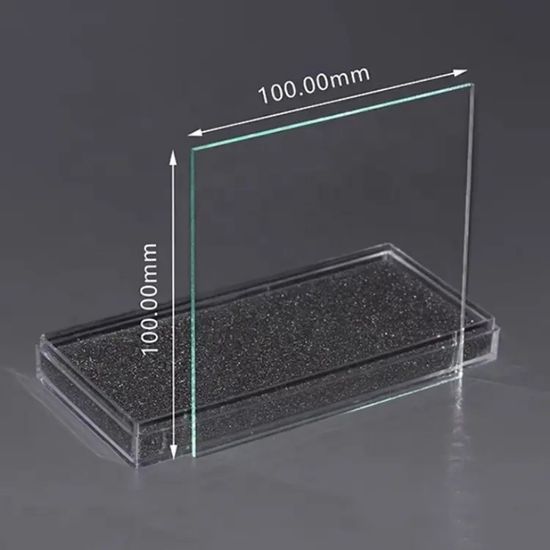
0.7mm 1.0mm 1.1mm Ultra Thin Borosilicate 3.3 Round Wafer ITO Fto Coated Conductive Lab Electrode Pattern Etched Polished Edge Glass
US$8.00-18.00
49 Pieces(MOQ)

I have found results from7000+products and2000+suppliers aboutIto glass price




The price of ITO glass is primarily driven by Sheet Resistance (measured in ohms/sq), Visible Light Transmittance, and Glass Thickness. Generally, lower resistance (e.g., <10 ohms/sq) requires a thicker ITO coating, which increases the cost. Additionally, the type of substrate (e.g., Soda-lime glass vs. Borosilicate glass) and the uniformity of the coating across the surface are critical price factors. For high-end electronics, a transmittance of >85% is standard, and any requirement exceeding this will command a premium price.
Standard sizes (e.g., 100mm x 100mm) are more economical due to mass production. Custom dimensions, laser etching for circuit patterns, and CNC edge grinding significantly increase labor and machine time costs. If your application requires chemically strengthened glass (Gorilla glass equivalent) or specific anti-reflective (AR) or anti-fingerprint (AF) coatings, expect the unit price to rise by 20-50% depending on the complexity of the stack.
Buyers must ensure the supplier adheres to ISO 9001 for quality management and RoHS/REACH compliance, as Indium is a heavy metal and environmental regulations are strict in the EU and US markets. For touch-panel applications, request Haze value reports (<1%) and surface roughness (Ra) data, typically measured via Atomic Force Microscopy (AFM), to ensure compatibility with thin-film deposition processes.
The biggest risks are physical breakage and surface oxidation. ITO glass is highly fragile and sensitive to moisture. Ensure the supplier uses vacuum-sealed packaging with interlayer paper (acid-free) and robust wooden crate reinforcement. For high-value shipments, it is mandatory to use shock-absorber labels (e.g., ShockWatch) on the outer packaging to monitor handling during transit.
Focus on volume-based tiered pricing and long-term supply agreements. Since Indium is a precious metal, prices fluctuate with the global market. You can negotiate a fixed manufacturing fee while allowing the material cost to peg to the London Metal Exchange (LME) Indium price. Additionally, requesting un-etched large sheets and performing the cutting locally can sometimes reduce the total cost of ownership (TCO) if you have the facilities.
Always utilize Secured Trading Services provided by Made-in-China.com to ensure payment is only released upon proof of shipment. For first-time bulk orders, it is highly recommended to hire a third-party inspection agency (like SGS or Intertek) to perform a pre-shipment inspection (PSI) to verify resistance uniformity and coating adhesion (Cross-hatch tape test) before the final balance is paid.