
Satisfies 1 requirement
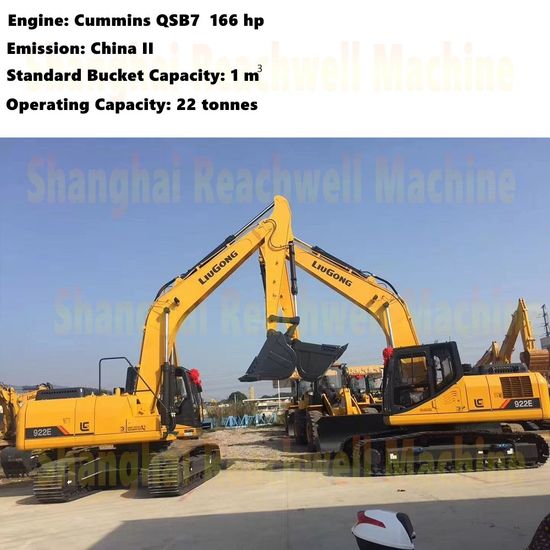
Used Liugong Excavator Liugong 920e 922D 926e
US$20,000.00-30,000.00
1 Piece(MOQ)

I have found results from40000+products and10000+suppliers aboutLiugong excavator




Selecting the correct model requires matching the operating weight and bucket capacity to your specific project. For urban construction or landscaping, compact excavators (3.5 to 6 tons) are ideal due to their maneuverability. For heavy mining or large-scale earthmoving, large excavators (30 to 90 tons) provide the necessary breakout force. Always verify the engine power (kW) and ensure it meets local emission standards like Tier 4 Final or Stage V for international markets.
Focus on the 'Big Three' components: the Engine (often Cummins or Yanmar), the Hydraulic Pump (Kawasaki or Rexroth), and the Main Control Valve. Ensure the hydraulic system offers load-sensing technology for fuel efficiency. Additionally, check the undercarriage durability, specifically the track link hardness and roller quality, to minimize long-term maintenance costs.
Ensure the machine is CE certified for the European market or EPA compliant for the US. Safety features must include ROPS (Roll-Over Protective Structure) and FOPS (Falling Object Protective Structure) certified cabins. For digital management, prioritize units equipped with Liugong’s 'iLink' telematics system, which allows for remote monitoring of fuel consumption, location, and mechanical health.
Calculate the Total Cost of Ownership (TCO) by factoring in the initial purchase price, fuel consumption rates (L/h), and the availability of wear parts (teeth, filters, seals). Liugong typically offers a 20-30% price advantage over premium Western brands while maintaining high residual value. Buyers should negotiate for a comprehensive warranty (e.g., 2 years or 4,000 hours) to secure their investment.
The biggest risks include logistical damage during sea transit and non-compliance with local emission laws. To mitigate this, always request a Pre-Shipment Inspection (PSI) by third parties like SGS or Intertek. Ensure the supplier provides a Certificate of Origin to potentially benefit from preferential tariffs under trade agreements.
Excavators are typically shipped via Ro-Ro (Roll-on/Roll-off) vessels to prevent disassembly, or via Flat Rack containers for larger models. For smaller units, 40HC containers can be used if the boom is detached. Ensure the machine is treated with anti-corrosion wax before boarding to protect against salt spray during the voyage.
Use Letters of Credit (L/C) or Trade Assurance through reputable platforms like Made-in-China.com to ensure funds are only released upon proof of shipment. When negotiating, don't just push for a lower price; instead, negotiate for spare parts kits (filters, O-rings) for the first 2,000 hours of operation and technical training materials for your local operators.