
Satisfies 1 requirement
Compact 5 Ton Mini Dumper with Engineering Steel Rubber Track Features
US$899.00-1,100.00
1 Piece(MOQ)

I have found results from20000+products and8000+suppliers aboutMini track dumper


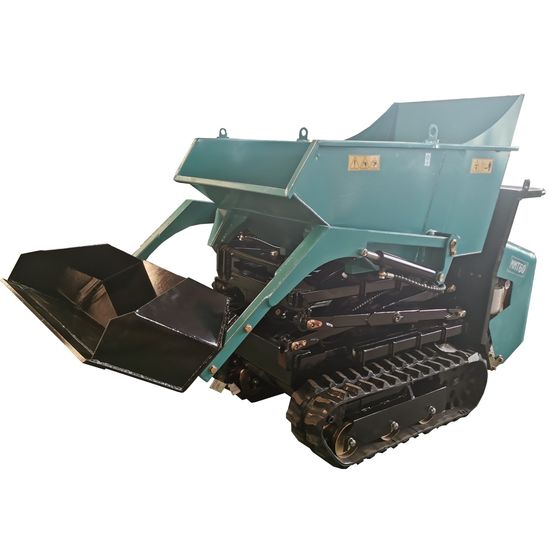


When evaluating a mini track dumper, prioritize the payload capacity (typically ranging from 300kg to 1000kg) and the engine type (gasoline vs. diesel). Ensure the unit features a hydraulic tipping system for efficient unloading and a robust rubber track design to minimize ground pressure and maximize traction on soft or uneven terrain. For high-intensity use, look for models with expandable track widths and multi-speed transmissions.
For the European market, the machine must carry the CE Marking and comply with the Machinery Directive 2006/42/EC and Noise Emission Directive 2000/14/EC. For the U.S. market, the engine must meet EPA (Environmental Protection Agency) Tier 4 or CARB emission standards. Always request ISO 9001 certification from the manufacturer to ensure consistent production quality.
For landscaping and gardening, a compact width (under 800mm) is essential to fit through standard gates. For construction and demolition, prioritize a reinforced steel skip and a high-tip function to discharge loads directly into skips. If working in enclosed spaces or residential areas, consider electric-drive models to eliminate exhaust fumes and reduce noise pollution.
Regular maintenance should focus on track tension adjustment and hydraulic fluid level checks. The air filter must be cleaned frequently, especially in dusty construction environments. Buyers should ensure the supplier provides a detailed O&M (Operation and Maintenance) manual and a spare parts kit including filters, spark plugs, and fuses for the first 500 hours of operation.
Always conduct a pre-shipment inspection (PSI) through a third-party agency like SGS or Intertek. Request a video of the specific unit's operation, demonstrating the hydraulic lift, track movement, and engine start-up. On Made-in-China.com, prioritize Audited Suppliers who have undergone comprehensive on-site verification of their manufacturing facilities.
Mini track dumpers are best shipped via LCL (Less than Container Load) in sturdy steel-framed plywood crates to prevent structural damage. Ensure the supplier uses moisture-proof packaging and applies anti-rust oil to exposed metal parts. For large orders, 20GP or 40HQ containers are more cost-effective; ensure the machines are properly lashed and chocked to prevent shifting during transit.
Negotiate for a warranty period of at least 12-24 months on core components like the engine and hydraulic pump. Instead of focusing solely on the unit price, ask for bundled wear-and-tear parts (e.g., extra rubber tracks) at a discount. Discuss OEM/ODM customization options, such as custom branding or specific color schemes, which can add significant value for your local market distribution.
Utilize secure payment services provided by platforms like Made-in-China.com to ensure funds are only released upon confirmation of shipment. Use Incoterms 2020 clearly in the contract—FOB (Free On Board) is generally recommended for buyers who have their own freight forwarders, while CIF (Cost, Insurance, and Freight) is better for those who want the supplier to handle the logistics risks to the destination port.