

Mining container
I have found results from200000+products and70000+suppliers aboutMining container
Commonly Used:
US$
—
Customization Available
Sample Available
Manufacturer First
Product Attributes:
Type: Power
High Pressure Storage & Transportation Equipment
Type: Server Cabinet
Type: Water-Cooled
Application: Apartment
Fast Installation: Fast Installation
Feature: Earthquake Resistant
Material: Sandwich Panel
Cup Accessories: with Handle
Style: Simple
Age: Adult
Color: Unicolor
Customized: Customized
Structure: Protection
All- packaged Type
Size: 1 Unit
Shell Material: Aluminum Alloy
Condition: New
Certification: ISO9001
Storage Objects: Gas
Video Surveillance Systems
Installation: Wall-Mounted Cabinet
Fan Number: Four
System Type: Open System
Fans Species: Frequency Fan
Noise Level: Low
Opening Type: Folding Door
Specification: Normal
Weight: 35t
Nominal Voltage: 1331.2V
Application: Office
Application: Hospital
Application: Industrial
Application: Commercial
Application: Residential Hostel
Fast Installation: Standard Installation
Feature: Easily Movable
Feature: Eco-Friendliness
Feature: Flexibly Combinable
Feature: Leak Proof
Feature: Moisture Proof
Feature: Safe
Feature: Thermal Insulation
Feature: Waterproof
Feature: Wind Resistance
Feature: Vacuum
Feature: Double Wall
Material: Steel Structure
Material: Container
Material: Steel
Size: 40 feet
Certification: TUV
Certification: CE
Certification: ISO
Certification: RoHS
Certification: GS
Network Integration System
Remote Monitoring System
Closed-Circuit Monitoring System
Electronic Monitoring System
Wireless Monitoring System

Satisfies 1 requirement
New Design Fast-Assembly Shipping Container Ablution for Overseas Mining Project
US$7,000.00-8,000.00
50 Pieces(MOQ)

Satisfies 1 requirement
Storage Container 20FT Heavy-Duty Site Office Fireproof Insulated Prefab Dormitory Mining Oilfield Extreme Weather
US$750.00
1 unit(MOQ)

Satisfies 1 requirement
Hitek Solar Container for Mining All-in-One Solar Container 40FT 1mwh 2mwh Battery Capacity Bess off-Grid Solar Kit
US$0.58-0.88
500,000 Watt(MOQ)

Satisfies 1 requirement
Anti-Rust Slim Prefab Portable Expandable Steel Container Office for Mining Worksites
US$3,899.00-4,499.00
50 Pieces(MOQ)

Satisfies 1 requirement
High Quality 34.5 Kg Flask Heavy Duty Cold Rolled Steel Cans 99.999% Purity Container for Gold Mining Extraction
US$100.00-600.00
10 Pieces(MOQ)

Satisfies 1 requirement
Custom GPU Miner Bitcoin Mining Liquid Cooling Container for Professional Use
US$40,000.00
1 Piece(MOQ)

Satisfies 1 requirement
Water Hydro Cooling Mining Container for Antminer S19 S19PRO Series Miner Whatsminer M56s M33s++ Antminer Box HK3
US$999.00-1,999.00
1 Piece(MOQ)

Satisfies 1 requirement
12 Tube CNG Tube Skid Bundle Container Complete Gas Storage Skid for Mining Vehicle Fuel Supply
US$63,000.00-91,000.00
1 Set(MOQ)

Satisfies 1 requirement
Mining Camp Accommodation, Mobile House, Container House for Remote Living
US$780.00-1,000.00
8 Pieces(MOQ)

Satisfies 1 requirement
Steel Hook Lift Waste Container Heavy Duty for Mining and Construction
US$1,543.00-1,598.00
1 Piece(MOQ)
Satisfies 1 requirement
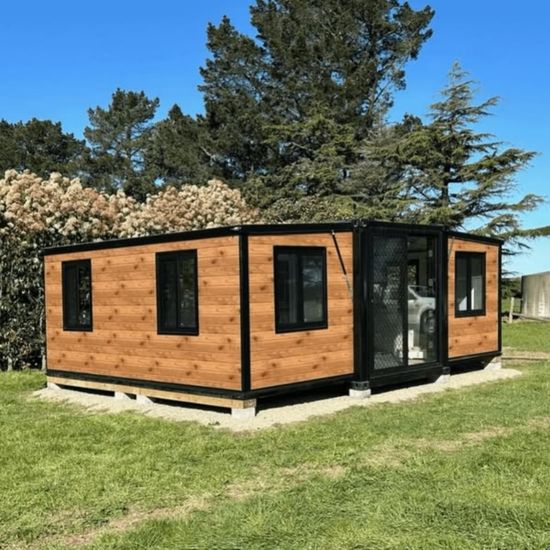
Collapsible Prefab Expandable Container House for Mining Camp ISO Approved
US$4,799.00-15,000.00
1 Piece(MOQ)

Satisfies 1 requirement
Liquid Immersion Cooling Container Data Center, High Density Compute Container for Mining & Ai Computing
US$5,000.00-8,000.00
1 Square Foot(MOQ)

Satisfies 1 requirement
Sectional Prefab Container Building for Mining Site with Fireproof Rockwool Insulated Wall
US$930.00-980.00
10 Sets(MOQ)

Satisfies 1 requirement
Easy Installation Prefab Portable Flat Pack Container for Classroom Mining Camp
US$999.00-1,300.00
8 Sets(MOQ)

Satisfies 1 requirement
Corrosion-Resistant Immersion Mining Container
US$10,000.00-15,000.00
1 Piece(MOQ)

Satisfies 1 requirement
Site Office Container Mining Camp Dormitory Temporary Accommodation Mobile Workshop Pop-up Retail Shop
US$890.00-900.00
10 Pieces(MOQ)

Satisfies 1 requirement
40hq Customized Shipping Air-Cooled Miner Water Hydro Cooling Mining Bitcoin GPU Crypto Miner Box for Btc House Miner T21 Container
US$9,999.00-40,000.00
1 Set(MOQ)

Satisfies 1 requirement
Sunevo 100kw 200kw Intelligent Foldable Solar Container Power System for Mining Microgrids and Site Operation
US$55,999.00-61,999.00
1 pieces(MOQ)

Satisfies 1 requirement
Liquid Cooling 1MW 2mwh 5mwh Solar Battery Container System Energy Storage Mining Power Supply with Good Service
US$370,000.00-375,000.00
1 Piece(MOQ)

Satisfies 1 requirement
40 Feet Hc Mobile Lab Reefer Container for Mining /Chemistry/Office/House
US$37,000.00-80,000.00
1 Set(MOQ)

Satisfies 1 requirement
Two-Floor Modular Flat-Pack Container Office and Worker Accommodation for Mining Camp
US$999.00-1,199.00
1 Piece(MOQ)

Satisfies 1 requirement
Foldable Wing Container Camp for Mobile Workforce Accommodation in Mining Areas
US$3,200.00-5,800.00
1 Piece(MOQ)

Satisfies 1 requirement
20FT 40FT Folding Prefab Mobile Container Villa, Prefabricated Temporary Worker Dormitory for Construction and Mining Site Staff
US$1,180.00-1,499.00
1 Set(MOQ)

Satisfies 1 requirement
Modern Expandable Container House Prefab Steel Structure Accommodation for Mining Camp
US$3,799.00-4,599.00
1 Set(MOQ)

Satisfies 1 requirement
Brand New 20FT Half Height Open Top Container for Mining Container
US$2,000.00-18,000.00
1 Piece(MOQ)

Satisfies 1 requirement
The Best Quality Sulfuric Acid Tank Container/Medical Transportation Container/Mining Container with The Best Price in 2021
US$9,000.00-12,000.00
1 Piece(MOQ)

Satisfies 1 requirement
Removable Container Houses Provide Free Office and Accommodation Design Solutions for Mining Sites
US$80.00-90.00
28 Square Meters(MOQ)

Satisfies 1 requirement
Container Office Construction Site Camps Mining Camp Accommodations Oil and Gas Camps Temporary Offices
US$860.00-1,360.00
2 Sets(MOQ)

Satisfies 1 requirement
Liquid Cooling 1MW 2mwh Solar Battery Container System Energy Storage Mining Power Supply with Good Service
US$110.00-150.00
1 KWH(MOQ)
Sourcing guidance for Mining Container
What are the key technical specifications to consider when selecting a mining container?
When sourcing a mining container, the cooling system is the most critical factor. You must choose between air cooling (using high-CFM industrial fans) or immersion cooling (using dielectric fluid), depending on your hardware's heat output. Ensure the container supports a total power capacity (e.g., 1MW to 2.5MW) that matches your ASIC miners. Additionally, verify the PDU (Power Distribution Unit) quality, looking for intelligent monitoring features and circuit breaker protection to prevent electrical fires.
How do I ensure the mining container is compliant with international electrical standards?
For cross-border procurement, compliance is non-negotiable. Ensure the container and its internal components (cables, switches, and PDUs) carry UL (for USA/Canada), CE (for Europe), or ETL certifications. The container itself should be built from ISO-standard shipping containers to ensure structural integrity during sea freight and on-site deployment. Request factory test reports for load balancing and thermal performance before final payment.
What environmental protections are necessary for outdoor mining operations?
Mining containers are often placed in harsh environments. Ensure the unit has an IP54 or higher rating for dust and water resistance. High-quality hydrophobic filters are essential to prevent moisture and salt spray from corroding the hash boards. For cold climates, look for containers with automated louvers that can recirculate heat to maintain an optimal operating temperature, while for hot climates, evaporative cooling pads are a cost-effective addition.
Can the internal configuration of the mining container be customized?
Yes, professional suppliers on Made-in-China.com typically offer customization for shelf spacing to accommodate different miner models (e.g., Antminer S19 vs. Whatsminer M50). You can also request specific network switch configurations (Gigabit Ethernet) and integrated fire suppression systems (such as FM200 or CO2) to protect your high-value hardware investment.
Cross-Border Procurement Risks and Strategies for Mining Containers
What are the primary logistics risks when shipping mining containers internationally?
Mining containers are heavy and bulky. The main risk is damage during transit or high demurrage fees at the port. Always use CIF or DAP Incoterms if you are not experienced in heavy machinery logistics. Ensure the supplier provides seaworthy packaging, including anti-corrosion coatings and secure internal bracing for the racks. It is highly recommended to purchase comprehensive marine insurance covering 110% of the cargo value.
How can I verify the credibility of a supplier and ensure transaction security?
Before transferring large sums, use the Audit Reports available on Made-in-China.com to verify the supplier's manufacturing capacity. Conduct a video factory audit to see the production line in real-time. For payment, utilize secured payment terms or Letters of Credit (L/C) for large-scale orders. Avoid suppliers who insist on 100% upfront payment via non-traceable methods.
What should I consider regarding customs duties and international trade policies?
Mining containers may be classified under different HS Codes (e.g., 8471.50 for processing units or 8609.00 for containers). Incorrect classification can lead to heavy fines or seizure. Consult with a professional customs broker to determine if your country imposes anti-dumping duties or specific Section 301 tariffs (for US buyers) on Chinese-made industrial equipment. Ensure all COO (Certificate of Origin) documents are prepared to leverage trade agreements.
What is the best strategy for negotiating with mining container manufacturers?
Focus on the Total Cost of Ownership (TCO) rather than just the initial purchase price. Negotiate for spare parts kits (fans, sensors, breakers) to be included in the bulk price. Ask for a tiered pricing structure based on the number of megawatts (MW) ordered. Additionally, push for a longer warranty period (at least 1-2 years) on the electrical infrastructure, as on-site repairs in remote mining farms are extremely expensive.