
Satisfies 1 requirement
Chinese 3.5 Ton Machine Mini Excavator Hydraulic Drive Deep Trench Micro Excavator Landscaping Rubber Track Mini Digger
US$1,800.00-2,000.00
1 Piece(MOQ)

I have found results from10000+products and6000+suppliers aboutTrench diggers


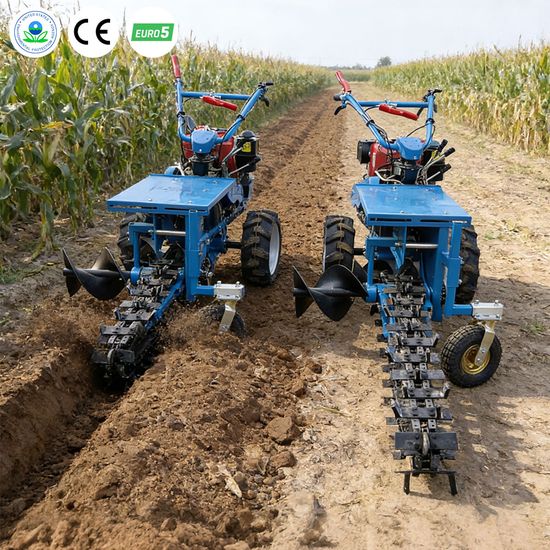


Selecting the correct trenching equipment depends on the soil conditions, required depth, and maneuverability. For small-scale utility work or landscaping, walk-behind trenchers are ideal due to their compact size. For heavy-duty construction or laying deep pipelines, ride-on or tractor-mounted trenchers are necessary. Ensure the machine's engine power (HP) and digging depth capacity align with your project specifications to avoid equipment strain and ensure operational efficiency.
Buyers should prioritize machines with high-torque hydraulic systems and wear-resistant carbide-tipped chains or teeth. Key certifications to look for include CE marking for the European market and ANSI/ASME compliance for North America. Verify the steel grade used in the chassis and the brand of the hydraulic pump (e.g., Rexroth or similar reputable brands) to ensure long-term durability and ease of finding replacement parts.
Safety is paramount in heavy machinery. Ensure the unit is equipped with an automatic engine shut-off (deadman switch), Roll-Over Protective Structures (ROPS), and Falling Object Protective Structures (FOPS). Compliance with ISO 12100:2010 for machinery safety is highly recommended. Additionally, check for noise emission standards if the equipment will be used in residential or urban areas.
A reliable supplier should provide a comprehensive O&M (Operation and Maintenance) manual and a guaranteed spare parts supply chain for at least 5-10 years. Ask if the supplier offers video technical support or has local service partners. Prioritize manufacturers on Made-in-China.com who offer a minimum 12-month warranty on core components like the engine and transmission.
The main risks include shipping damage, non-compliance with local emissions standards (e.g., EPA Tier 4 or EU Stage V), and high customs duties. To mitigate these, always request a Pre-Shipment Inspection (PSI) and ensure the supplier provides a Certificate of Origin to potentially benefit from trade agreements and reduce tariffs.
Trench diggers are often heavy and bulky. It is recommended to use Roll-on/Roll-off (RoRo) shipping or Flat Rack containers for larger units to prevent damage during loading. For smaller walk-behind models, LCL (Less than Container Load) in reinforced wooden crates is acceptable. Always clarify the Incoterms (e.g., FOB vs. CIF) to understand exactly where your liability for insurance and freight begins.
Utilize Secured Trading Services provided by platforms like Made-in-China.com to ensure your payment is only released after the goods have been shipped and verified. Avoid direct wire transfers to unknown accounts and always perform due diligence on the supplier's business license and export history.
Focus on Total Cost of Ownership (TCO) rather than just the unit price. Negotiate for extra wear parts (teeth, chains, filters) to be included in the initial purchase price. For bulk orders of 5 units or more, buyers can typically negotiate a 10-15% discount or request custom branding (OEM) and color schemes at no additional cost.