

Wholesale egr coolers
I have found results from3000+products and1000+suppliers aboutWholesale egr coolers
Commonly Used:
US$
—
Customization Available
Sample Available
Manufacturer First
Product Attributes:
Type: Brake System
Type: Exhaust Pipe
Standard Component: Standard Component
Technics: Casting
Body Material: Steel
Cold Style: Air-cooled
Certification: IATF16949
Radiator Type: Direct-flow
Radiator Core Type: Pipe Belt
Application: Excavator
Condition: New
Material: Aluminum
Function: Noise Reduction
Installation Position: Interior
Part Type: Body Parts
Component: Cooling Fan
Structure: Sealed Type
Cooling Fluid Type: Alcohol
Water Temperature Sensor Type: Digital Type
Cooling Fluid Brand: Great Wall
Main Market: South America
Suitable for Car Brands: All Brands
Discharge Standard: Euro IV
The Noise of Engine
The Combustion Noise
Color: Black
Technics: Push
Technics: Forging
Body Material: Aluminium
Cold Style: Water-cooled
Certification: ISO9001
Certification: CCC
Certification: CE
Certification: TS16949
Certification: RoHS
Certification: COP
Certification: E-Mark
Certification: ISO/TS16949
Certification: ISO13485
Certification: IATF-16949
Certification: ISO9002
Radiator Type: Cross-flow
Bar and Plate
Radiator Core Type: Tube-fin
Material: Steel
Material: Iron
Function: Performance Enhancement
Function: Safety Improvement
Function: Vibration Dampening
Part Type: Engine Parts
Component: Exhaust Pipe
Structure: Open Type
Water Temperature Sensor Type: Switch Type
Cooling Fluid Brand: Shell
Main Market: Eastern Europe
Main Market: Mild East
Main Market: Southeast Asia
Main Market: Africa
Main Market: Eastern Asia
Main Market: Oceania
Main Market: Europe
Discharge Standard: Euro V

Satisfies 1 requirement
EGR Cooler 23225749 21480645 21726458 22134241 24369697
US$499.00-569.00
5 Pieces(MOQ)

Satisfies 1 requirement
Original Auto Part P3nq-9f464-AA EGR Cooler for Jmc Grand Avenue Factory Wholesale
US$128.00-132.00
2 Pieces(MOQ)

Satisfies 1 requirement
6068 Engine EGR Cooler Re522589 Suitable for John Deere
US$225.00-230.00
5 Pieces(MOQ)
Satisfies 1 requirement
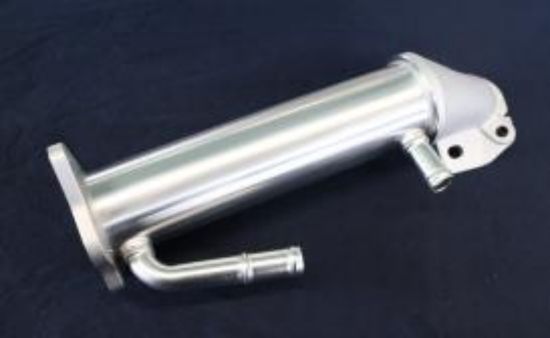
High-Performance EGR Cooler for Gasoline Cars Kyd-Lq-22b
US$50.00-200.00
1 Piece(MOQ)

Satisfies 1 requirement
LNG Truck EGR Cooler 5663727 Suitable for Dongfeng C-U-mm-Ins Z15 National VI Natural Gas Cooler
US$8.00-10.00
3 Pieces(MOQ)

Satisfies 1 requirement
Engine Parts Fb3q9u443AA EGR Valve Cooler for Ford Ranger P5at 3.2 Tdci
US$55.00-80.00
10 Pieces(MOQ)

Satisfies 1 requirement
Kato820V 820r Sany195/205/215/225-10 Excavator Mitsubishi 4m50 Engine EGR Cooler EGR Radiator Me230210
US$1.00-200.00
1 Piece(MOQ)

Satisfies 1 requirement
Me226760 Me226761 EGR Cooler, Engine Parts 4m50 HD820-6 Oil Cooler
US$190.00
10 Pieces(MOQ)

Satisfies 1 requirement
Powcode Dw10 EGR Valve Exhaust Gas Recirculation Cooler for Citroen Peugeot Ford
US$32.00-38.00
5 Pieces(MOQ)

Satisfies 1 requirement
Original EGR Cooler Assembly for Sinotruk HOWO Heavy Truck Diesel Engine
US$112.00-138.00
1 Piece(MOQ)

Satisfies 1 requirement
Egr Cooler 03G131512ae03G131512ap for Seat Altea/Leon/Toledo Iiiskoda Octavia II VW Golf V/Jettaiii/Passat/Touran
US$100.00
50 Pieces(MOQ)

Satisfies 1 requirement
EGR Cooler 504377416 504333891 504317811 504317815 504385699 for Ivec-O Daily F1c 3.0 Euro 5
US$200.00
50 Pieces(MOQ)

Satisfies 1 requirement
Isl EGR Cooler Kit Exhaust Recirculation Cooler Kit 4376312 5347234 5318560 4352346 4955484
US$430.00-450.00
1 Piece(MOQ)

Satisfies 1 requirement
OEM EGR Cooler for Foton for Isc 8.3L Truck Engine OE 5365982
US$85.00
1 Piece(MOQ)

Satisfies 1 requirement
Engine Cooling System EGR Cooling Module EGR Cooler for Saic Maxus V80 OEM C00046488
US$300.00-330.00
1 Piece(MOQ)

Satisfies 1 requirement
Isf2.8 Exhaust Gas Recirculation EGR Cooler 5308965 5263165 5342842 5310100
US$115.00
1 Piece(MOQ)


Satisfies 1 requirement
EGR Cooler Hydraulic Oil Cooler Me230210 60289254 4m50 for Excavator Spare Parts
US$200.00-300.00
10 Pieces(MOQ)

Satisfies 1 requirement
Exhaust Gas Circulation EGR Valve 03L 131 512 CH with EGR Cooler
US$15.00-150.00
1 Piece(MOQ)

Satisfies 1 requirement
Exhaust Gas Recirculation EGR Valve and Cooler Full Unit High Quality Replacement
US$15.00-150.00
1 Piece(MOQ)

Satisfies 1 requirement
EGR Cooler for Toyota Hilux 1gd-Ftv 2gd-Ftv 25681-0e010 256810e010
US$110.00-120.00
50 Pieces(MOQ)

Satisfies 1 requirement
51081000131 Exhaust Cooler Egr Cooler for Man 51081000131 58108157211 58108157035 58108157136
US$85.00-89.50
50 Pieces(MOQ)

Satisfies 1 requirement
Egr Coolers for FIAT Daily Mk4 2.3 Jtd 504178568 OEM 504178568
US$39.94-44.94
20 Pieces(MOQ)

Satisfies 1 requirement
High Quality Stainless Steel Egr Cooler for Ford Transit Mk7 OE: 6c1q-9h454-Bb
US$50.00
5 Pieces(MOQ)

Satisfies 1 requirement
Cummins EGR Cooler 5342842 5263165 5310100 for Engine ISF QSF Series
US$73.80-75.20
20 Sets(MOQ)

Satisfies 1 requirement
Ouri Truck Parts EGR Cooler Kit 21480645 for 08-10 Volvo D13 Mack MP8
US$500.00-700.00
5 pieces(MOQ)

Satisfies 1 requirement
PERFECTRAIL CK3Q9F464BB 1807898 Wholesale Auto Parts Engine Exhaust Gas Recirculation EGR Valve Cooler for Ford Transit 2013-
US$39.90-43.90
20 Pieces(MOQ)

Satisfies 1 requirement
EGR Cooler for A4721403814 A4721401575 2021-2023 Detroit Diesel Dd15 Dd16
US$350.00-400.00
5 Sets(MOQ)

Satisfies 1 requirement
Egr Cooler Assembly for Truck Sitrak Sinotruk Mc07 082V08100-7211 Yutong/Hino/JAC/Jmc/Foton/Forland/Isuzu/DFAC/FAW/HOWO/Yuejin/Nkr/Nhr/Dongfeng/Sany/Auman
US$252.14
1 Piece(MOQ)
Sourcing guidance for Wholesale Egr Coolers
What are the key technical specifications to evaluate when sourcing EGR coolers?
When sourcing EGR (Exhaust Gas Recirculation) coolers, you must prioritize material integrity and thermal efficiency. Look for 304 or 316L stainless steel construction to ensure resistance to high-temperature corrosion and acidic exhaust condensates. The internal structure, typically tube-and-shell or fin-and-plate designs, should be evaluated for its heat exchange surface area and resistance to soot clogging. Additionally, verify that the TIG welding quality is superior to prevent coolant-to-exhaust leaks, which can lead to catastrophic engine failure.
Which compliance standards and certifications are mandatory for international trade of EGR coolers?
Suppliers must adhere to strict automotive quality management systems. Ensure the manufacturer is IATF 16949:2016 certified, as this is the global standard for automotive industry quality. For products destined for the US or EU markets, they must support compliance with EPA Tier 4 or Euro 6 emission standards. Furthermore, request leak test reports (helium or pressure tests) and salt spray test results to ensure the product meets long-term durability requirements in harsh environments.
How can a buyer verify the performance and compatibility of wholesale EGR coolers?
Compatibility is critical to avoid high return rates. Ensure the supplier provides OEM cross-reference numbers (e.g., Cummins, Volvo, or Detroit Diesel equivalents). Request thermal cycling test data to see how the cooler performs under extreme temperature fluctuations. For wholesale orders, it is highly recommended to order a functional sample to perform a fitment test on the specific engine model and check for flange alignment and sensor port precision.
What factors influence the cost-efficiency of bulk EGR cooler procurement?
To optimize costs, analyze the Total Cost of Ownership (TCO) rather than just the unit price. High-quality coolers reduce warranty claim costs and labor for replacements. Seek suppliers on Made-in-China.com that offer tiered pricing for MOQs of 50-100 units, which can typically reduce costs by 15-25%. Additionally, consider the weight-to-volume ratio for shipping; sourcing from suppliers who offer compact, protective packaging can significantly lower your per-unit landed cost.
Cross-Border Purchasing Considerations for EGR Coolers
What are the primary risks in cross-border sourcing of automotive cooling components?
The biggest risk is internal leakage (coolant entering the combustion chamber), which is often not detectable until the unit is installed. To mitigate this, use Trade Assurance services and mandate a Pre-Shipment Inspection (PSI) by a third party like SGS or Intertek. Ensure the contract specifies a defective rate threshold (e.g., <1%) and clearly outlines the compensation or replacement policy for units that fail within the first 6-12 months of operation.
How should buyers negotiate with Chinese suppliers for long-term EGR cooler supply?
Focus on technical transparency and lead time stability. Negotiate for a fixed price agreement for 6-12 months to hedge against fluctuations in stainless steel prices. Ask for customized branding (laser etching) and neutral packaging if you are a distributor. Professional buyers on Made-in-China.com often secure better terms by providing a 12-month rolling forecast, which helps the factory plan raw material purchases and guarantees your production slot.
What are the logistics and customs precautions for shipping heavy engine parts to international markets?
EGR coolers are heavy and susceptible to physical impact. Insist on double-walled corrugated boxes with molded foam inserts or wooden crates for LCL (Less than Container Load) shipments. Regarding customs, ensure the HS Code (typically 8419.50 or 8409.91) is correctly declared to avoid delays or incorrect duty applications. For shipping to the US, be mindful of Section 301 tariffs and explore DDP (Delivered Duty Paid) terms if you prefer the supplier to handle all import complexities.
How can transaction security be ensured during large-scale wholesale payments?
Avoid using high-risk payment methods for initial orders. Utilize Escrow-based payment systems provided by reputable platforms like Made-in-China.com to ensure funds are only released upon proof of shipment. For large recurring orders, consider Letters of Credit (L/C) or staged payments (30% deposit / 70% upon BL copy) to maintain cash flow while ensuring the supplier remains committed to the quality standards agreed upon.