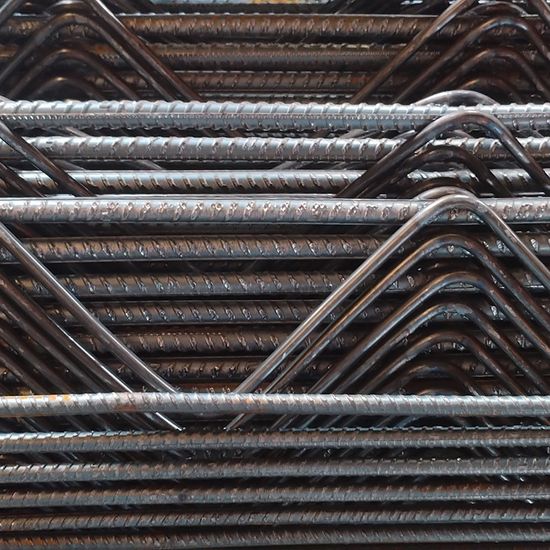
Angle bar roof trusses manufacturers
I have found results from400+products and200+suppliers aboutAngle bar roof trusses
Sourcing guidance for Angle Bar Roof Trusses
What are the key technical specifications to consider when sourcing Angle Bar Roof Trusses?
When evaluating angle bar trusses, the most critical factor is the steel grade, typically Q235B or Q345B (ASTM A36 or A572), which determines tensile strength and load-bearing capacity. You must verify the thickness of the angle steel (standard ranges often fall between 3mm to 10mm) and the precision of the welding joints. Ensure the trusses utilize hot-dip galvanization with a coating thickness of at least 85μm to prevent corrosion in outdoor or industrial environments.
Which international compliance standards should these structural components meet?
For B2B cross-border procurement, products should ideally comply with ISO 9001 for quality management and EN 1090-1/2 (CE Marking) for structural steel components if exporting to Europe. For the US market, adherence to AWS D1.1 (American Welding Society) standards for structural welding is essential. Always request a Mill Test Certificate (MTC) to trace the chemical and physical properties of the steel back to the original batch.
How can I ensure the structural integrity and safety of the trusses for specific usage scenarios?
Buyers should provide the supplier with wind load and snow load requirements specific to the installation site. Request CAD or Tekla structural drawings and a loading calculation report verified by a structural engineer. For high-span warehouses or industrial plants, prioritize trusses with gusset plate reinforcements at the joints to distribute stress more effectively than simple miter welds.
What are the advantages of prefabricated angle bar trusses over on-site fabrication?
Prefabricated trusses offer superior quality control as they are manufactured in a factory setting with specialized jigs. This ensures dimensional consistency (tolerance within ±2mm), which is difficult to achieve on-site. Additionally, factory-applied anti-corrosion coatings are more durable. Sourcing pre-assembled or 'knock-down' kits from professional manufacturers on Made-in-China.com can reduce on-site labor costs by up to 40%.
Cross-Border Procurement Risks and Strategies for Structural Steel
How can I mitigate the risk of receiving sub-standard steel or poor welding quality?
The most effective strategy is to hire a third-party inspection agency (such as SGS or BV) to perform a pre-shipment inspection. They should conduct Non-Destructive Testing (NDT), specifically Ultrasonic Testing (UT) or Magnetic Particle Inspection (MPI) on critical weld seams. Never release the final 70% balance payment until the inspection report confirms the goods meet the agreed-upon technical drawings.
What are the best practices for negotiating with structural steel suppliers?
Negotiate based on the theoretical weight vs. actual weight. Steel prices fluctuate, so it is wise to lock in a price based on a fixed formula linked to global steel indices. Ask for volume-based discounts; for orders exceeding 50 tons, suppliers can often reduce the price by 5-10%. Ensure the contract specifies the zinc coating weight and the brand of welding consumables used.
What logistics and shipping precautions are unique to heavy roof trusses?
Angle bar trusses are bulky and can be easily deformed if improperly loaded. Specify seaworthy packaging using steel strapping and wooden dunnage. For oversized trusses, consider 40ft Open Top containers or Flat Rack containers, though standard 40ft HQ containers are more cost-effective if the trusses are designed in sections. Ensure the supplier provides a detailed packing list and assembly manual to avoid confusion during customs clearance and installation.
How do I ensure transaction security and policy alignment in international trade?
Utilize Trade Assurance or Letters of Credit (L/C) for large-scale industrial orders to protect your capital. Be aware of Anti-Dumping Duties (ADD) that some countries impose on Chinese steel products; consult with a local customs broker to verify the HS Code (typically 730890) and applicable tariffs. Sourcing through verified 'Diamond Members' on Made-in-China.com provides an extra layer of supplier background validation.