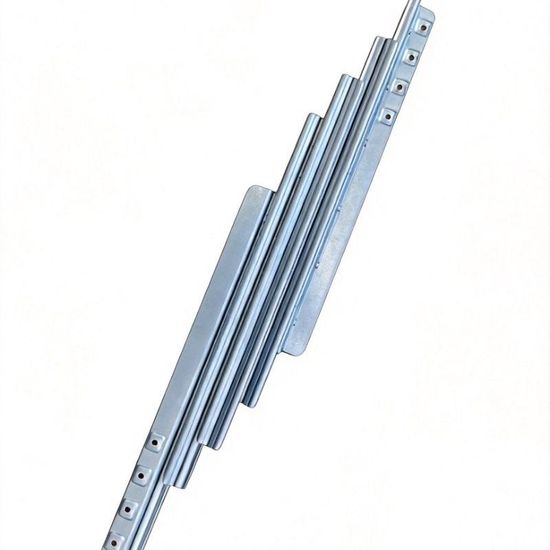
China 8-120kg Light Steel Rails Iron Track Prices

High Quality Light Steel Rails Iron/Railway Steel Railq235 Steel Rail

Track Steel Q235B Light Iron Profile Train Rail Railway Railroad Steel Rails

I have found results from9000+products and2000+suppliers aboutIron rail price


The price of iron rails is primarily driven by material grade (e.g., Q235 or Q345 carbon steel) and surface treatment. For outdoor durability, Hot-Dip Galvanization is the industry standard to prevent rust, whereas Powder Coating offers aesthetic variety. Buyers should specify the wall thickness (minimum 1.5mm to 2.0mm) and picket spacing (usually <4 inches for safety compliance) to ensure structural integrity and cost-efficiency.
To ensure market entry and safety, verify that products meet ASTM A123 (for zinc coatings) or EN 10219 (for cold-formed welded structural sections). For residential or commercial construction, ensure the railing can withstand a concentrated load of 200 lbs or a linear load of 50 lbs/ft as per IBC (International Building Code) or local equivalent standards.
Economic feasibility is optimized by choosing modular or prefabricated designs over fully custom wrought iron work. Modular systems reduce labor costs by 30-50% during installation. Additionally, purchasing in Full Container Loads (FCL) significantly lowers the per-unit shipping cost compared to Less than Container Load (LCL), which is vital for heavy steel products.
For coastal environments, high-salinity air requires marine-grade primers or specialized anti-corrosion coatings to prevent premature failure. For high-traffic commercial areas, prioritize heavy-duty top rails with ergonomic grips. In residential settings, focus on aesthetic finishes and child-safety features, such as smooth welds and no sharp edges.
The biggest risks include rusting during sea transit and dimensional inaccuracies. To mitigate this, require suppliers to use VCI (Volatile Corrosion Inhibitor) packaging and provide a Pre-Shipment Inspection (PSI) report. Ensure the contract specifies a tolerance level (e.g., ±1-2mm) for lengths and hole alignments to avoid assembly issues on-site.
Focus on volume-based pricing tiers and long-term cooperation. Ask for a breakdown of the raw material cost vs. processing cost; since steel prices fluctuate, you can negotiate a price adjustment clause based on global steel indices. Requesting OEM/ODM capabilities can also add value if you need custom branding without a significant price hike.
Utilize Secured Trading Services provided by platforms like Made-in-China.com to ensure payment is only released upon confirmation of shipment. For large orders, use Letters of Credit (L/C) or a 30% deposit / 70% balance against Bill of Lading (B/L) structure. Always verify the supplier's Audit Reports and Diamond Member status to confirm their manufacturing scale.
Due to the weight and length, Sea Freight (FOB or CIF) is the most viable method. Ensure the supplier uses steel-reinforced wooden crates or palletized bundles to prevent bending. For inland delivery, confirm if the supplier can provide DDP (Delivered Duty Paid) terms to simplify customs clearance and local trucking, especially if you lack a dedicated import license.