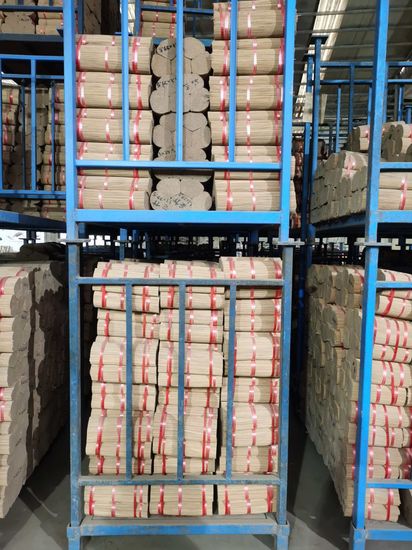
Bamboo Sticks for Kites Factory Price for Sale

Bamboo BBQ Stick for Kites BBQ Skewer Kabob Tools Barbecue Sticks

China Skewer Factory Making BBQ Bamboo Sticks

Direct From Factory: Free Samples of Natural Bamboo BBQ Sticks

I have found results from400+products and200+suppliers aboutKite bamboo sticks factory


When sourcing from a Kite Bamboo Sticks Factory, you must prioritize flexibility and tensile strength. The bamboo should be Tonkin bamboo (Phyllostachys amabilis) or Mao bamboo, as these varieties offer the best strength-to-weight ratio. Ensure the sticks are straight, knot-free (or sanded smooth), and have a moisture content between 8% and 12% to prevent cracking or molding during transit and storage. For professional kites, specify uniform diameter tolerances (±0.1mm) and tapered ends if required for specific aerodynamic designs.
Request the factory to perform a flexural strength test to ensure the sticks can bend without splintering. The bamboo should undergo a carbonization or anti-insect treatment (such as boiling or fumigation) to prevent pest infestation and rot. Check for surface smoothness; high-quality sticks are polished to prevent tearing the kite fabric. You should also ask for batch consistency reports to ensure that the weight of each stick is uniform, which is critical for the balance and flight stability of the final product.
For cross-border trade, especially to the EU and US, you must ensure the factory provides a Phytosanitary Certificate to prove the bamboo is free from pests. If the sticks are used in children's kite kits, they must comply with EN71 (Europe) or ASTM F963 (USA) toy safety standards, focusing on physical hazards (splinters) and chemical safety (non-toxic coatings). Additionally, look for FSC (Forest Stewardship Council) certification if your brand emphasizes sustainable sourcing.
Beyond traditional kites, these sticks are used for DIY craft kits, garden markers, and lightweight structural models. Factories usually offer customization in terms of length (ranging from 30cm to 200cm), shape (round, flat, or square profiles), and color (natural, bleached, or dyed). For B2B buyers, requesting pre-cut lengths and retail-ready bundling can significantly reduce local assembly costs.
The biggest risks are moisture damage (mold) and deformation during sea freight. To mitigate this, insist on silica gel desiccant packets in every master carton and ensure the use of 5-layer corrugated export packaging. Use Made-in-China.com's Secured Trading services to hold payment until a Pre-shipment Inspection (PSI) confirms the moisture levels and quantity match your specifications.
Focus on Volume-Based Pricing; bamboo production is highly scalable, so increasing your order from 10,000 to 50,000 units can often yield a 15-20% discount. Negotiate for FOB (Free On Board) terms to maintain control over your shipping costs. If you are a repeat buyer, request a 30/70 payment structure (30% deposit, 70% upon presentation of the Bill of Lading) to improve your cash flow.
Bamboo sticks are relatively light but bulky, meaning you will likely be charged based on volumetric weight. To optimize shipping costs, ask the factory to vacuum-pack or high-density bundle the sticks to minimize wasted space. Ensure the HS Code (typically 140110) is correctly declared to avoid customs delays or incorrect duty applications. For urgent samples, use air express, but for bulk, LCL (Less than Container Load) sea freight is the most economical method.
Always verify the supplier's Business License and Export Permit on the Made-in-China.com platform. Look for Audited Suppliers who have undergone on-site inspections by third-party agencies like SGS or TÜV Rheinland. Avoid using private wire transfers; always use official corporate bank accounts or the platform's integrated payment systems to ensure a traceable paper trail for dispute resolution.