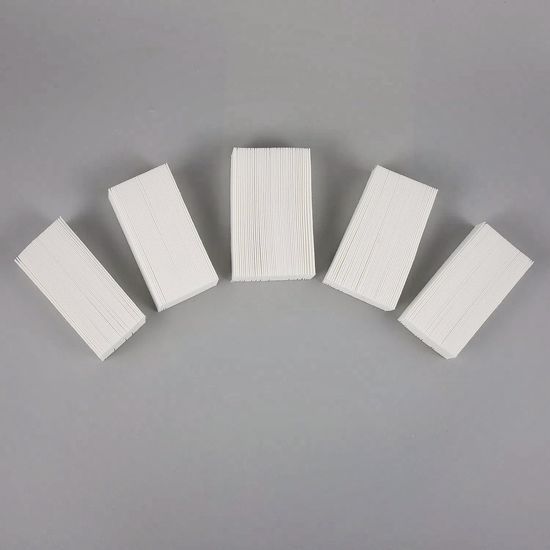
Grinding Coolant Filter Paper Non Woven Fabrics Filter Paper

Nonwoven Rayon Coolant Filter Paper

Nonwoven Filter Paper Filter Paper Manufacturers for Grinding

I have found results from3000+products and900+suppliers aboutPaper non woven fabric


Buyers should prioritize Gram Weight (GSM), typically ranging from 10gsm to 150gsm, as it determines thickness and strength. For medical or hygiene use, ensure the fabric has Hydrophilic or Hydrophobic treatments. Additionally, verify the Tensile Strength (MD/CD ratio) to ensure the material can withstand machine processing without tearing.
For medical applications (masks, gowns), products must meet EN 14683 (EU) or ASTM F2100 (US) standards. For general packaging or wipes, look for OEKO-TEX Standard 100 to ensure the absence of harmful substances. If the product is marketed as eco-friendly, verify GRS (Global Recycled Standard) or biodegradability certifications like EN 13432.
Spunbond technology is ideal for shopping bags and furniture lining due to its high strength and low cost. Meltblown technology is essential for filtration (HEPA/Masks) due to its fine fiber structure. For 'paper-like' non-wovens used in wallcoverings or high-end packaging, Wet-laid or Air-laid processes provide the best texture and absorbency.
The price of non-woven fabric is highly sensitive to Polypropylene (PP) or Polyester (PET) resin market fluctuations. To optimize costs, buyers should negotiate based on tonnage rather than linear meters. Additionally, choosing a supplier on Made-in-China.com that offers custom slitting services can significantly reduce waste and secondary processing costs at the destination.
Always request a Pre-Shipment Inspection (PSI) by a third-party agency like SGS or Intertek. Ensure the supplier provides a COA (Certificate of Analysis) for every batch. For new suppliers on Made-in-China.com, utilize the Audit Reports to verify their actual production capacity and factory conditions before placing a deposit.
Focus on Volume-Based Tiered Pricing; for example, a 40HQ container should yield a 5-10% discount compared to LCL orders. Negotiate Packaging Specifications (e.g., core diameter, roll width, and moisture-proof wrapping) to prevent damage during long-term sea freight, which is a common cause of disputes.
Non-woven fabric is a high-volume, low-weight commodity. To maximize shipping efficiency, request vacuum packaging or compressed rolls to fit more units into a container. Ensure the HS Code (typically 5603) is correctly declared to avoid customs delays or incorrect duty applications in the destination country.
Use Secured Payment services provided by reputable platforms like Made-in-China.com to ensure funds are only released upon proof of shipment. Avoid direct wire transfers to private accounts. For large-scale contracts, consider Letter of Credit (L/C) to balance the risk between the buyer and the seller.